
127: Sibling Dynamics + Drive Thru Challenge + The Eras Tour

127: Sibling Dynamics + Drive Thru Challenge + The Eras Tour

 Listen & Subscribe

YouTube

How to nurture healthy sibling dynamics

In episode 127, we delve into a topic that’s close to home for many of us: sibling dynamics. Whether you have siblings of your own or not, understanding the intricacies of these relationships can provide valuable insights into human connections and personal growth. Join us as we explore personal experiences, the evolution of sibling dynamics, and strategies for fostering strong sibling relationships.

How Sibling Dynamics Change Over Time

Siblings are like companions on life’s roller coaster, and as time passes, the dynamics of these relationships often shift. We’ll discuss how sibling relationships evolve from childhood through adolescence and into adulthood. The way we interact, communicate, and support one another can undergo significant transformations.

Childhood Bonds

In the early stages of life, siblings are often our first playmates and confidants. Childhood is marked by shared secrets, imaginative adventures, and the occasional squabble over toys or the front seat of the car. These years lay the foundation for the sibling relationship, forming a bond that is deeply rooted in the experiences and shared moments of innocence.

Adolescent Challenges

As we navigate the tumultuous waters of adolescence, sibling dynamics can become more complex. The transition from childhood to adolescence brings about changes in our interests, social circles, and personal identities. Siblings may feel left out. Or they may begin to assert their individuality, leading to clashes over space, privacy, and differing world views.

Sibling relationships often provide a safe opportunity for growth as teens learn to navigate conflicts and develop empathy.

Entering Adulthood

Entering adulthood, sibling relationships can change drastically.

In the best cases, the rivalries and petty arguments of the past tend to fade into the background as we mature emotionally and gain a deeper understanding of one another.

Adult siblings often become each other’s confidants, providing support in times of hardship and celebrating each other’s successes. Shared responsibilities in caring for aging parents and growing children can be a source of stress for some, and a great source of comfort and security for others.

While not true for everyone, a shared family history often creates a stronger bond as we create our own paths in life.

Support Systems

Sibling relationships can be a vital source of emotional support throughout life’s trials and tribulations. As adults, we learn to appreciate the unique perspectives and experiences our siblings bring to the table. Whether it’s offering a shoulder to cry on during a tough breakup, sharing parenting advice, or being a listening ear during career challenges, our siblings often play a pivotal role in our support systems.

Shared Responsibilities

Another significant shift occurs when adult siblings start to share responsibilities within the family, such as caring for aging parents or managing family finances. These shared responsibilities can strengthen the sibling bond and deepen the connection as we navigate the challenges and joys of adulthood together.

In essence, sibling dynamics are a journey through life’s phases, with each stage offering unique experiences and opportunities for growth. While the dynamics may shift, the bond between siblings remains a constant source of connection, understanding, and love. It’s a testament to the enduring power of family ties and the ever-evolving nature of human relationships.

Ideas for Fostering Good Sibling Relationships

Siblings are more than just family; they can be lifelong friends and allies. If you’re in the deep with the teen years, it can be easy to get caught up in sibling drama, but here are a few ideas on how to foster positive sibling relationships:

  1. Eating Meals Together
    Sharing meals together can be a wonderful way to connect. There are Whether it’s breakfast on a lazy Sunday or a special holiday dinner, make an effort to sit down as a family and enjoy each other’s company. This creates a relaxed atmosphere for conversation and bonding.
  2. Creating Lasting Memories
    Trips and adventures offer incredible opportunities to create lasting memories. Plan a family vacation, a weekend getaway, or even a simple day trip to explore new places and experiences together. These shared adventures can become cherished stories for years to come.
  3. Engage in Games and Activities
    Engaging in fun activities and games can break the monotony of daily life and provide opportunities for laughter and camaraderie. Whether it’s board games, outdoor sports, or video games, find activities that everyone enjoys and make them a regular part of your family time.
  4. Showing Up for Each Other
    One of the most important aspects of a strong sibling relationship is being there for each other during life’s ups and downs. Celebrate each other’s achievements and milestones, and offer support and empathy during challenging times. Knowing you can rely on your siblings can provide a deep sense of security and connection.
  5. Establishing Traditions
    Traditions create a sense of continuity and shared identity within a family. Establish your own family traditions, whether it’s a weekly movie night, an annual camping trip, or a holiday ritual. These traditions help reinforce the bond between siblings and create a sense of belonging.
  6. Open and Honest Communication
    Encourage open and honest communication within the family. Create a safe space where siblings can express their thoughts, feelings, and concerns without judgment. Effective communication fosters understanding and strengthens relationships.
  7. Respect Each Other’s Differences
    Every sibling is unique, with their own interests, talents, and quirks. Embrace these differences and celebrate each sibling’s individuality. Respect for each other’s choices and boundaries is essential for a healthy relationship.
  8. Collaborate on Projects
    Collaborative projects can be a great way to work together and learn from each other. Whether it’s a home improvement project, a creative endeavor, or even volunteering for a charitable cause, working as a team can deepen your connection.
  9. Family Meetings
    Schedule regular family meetings where everyone can discuss their thoughts, concerns, and goals. This helps ensure that everyone’s voices are heard, and it encourages a sense of collective decision-making and problem-solving.
  10. Resolve Conflicts Constructively
    Conflicts are natural in any relationship, but it’s essential to address them constructively. Teach siblings conflict resolution skills, emphasizing the importance of compromise, active listening, and finding common ground.

Remember, building and maintaining positive sibling relationships is an ongoing process that requires effort and understanding from all parties involved. By incorporating these ideas into your family life, you can create a supportive and loving environment that fosters strong sibling bonds, ensuring that your kids’ relationships remain a source of joy and strength throughout their lives.

Teacher Tip: Every Sibling is Different

If you’re an educator or a parent with multiple children, remember this essential tip: every sibling is a unique individual. Avoid comparing them or expecting them to be identical. Recognizing and celebrating their differences can lead to healthier sibling dynamics.

In this episode, we mentioned or used the following resources about sibling dynamics, Taylor Swift, and more.

Have a question?

If you have a question about something you heard or just want to give us some feedback, please leave us a comment below.  We would love to hear from you!

About Us

Karlie Duke
Karlie Duke

Communications Director

Tobin Hodges
Tobin Hodges

Program Director

Caleb Hatchett
Caleb Hatchett

Podcast Host

More Resources You Might Like
What is it like to be a foster family?
Ep. 119 Diverse Families- Multi-Cultural/Multiracial Families
Happy multi-ethnic family at the beach smiling at the camera

126: Teen Support Groups & X App

126: Teen Support Groups & X App

 Listen & Subscribe

YouTube

The Power of Support Groups: Why They Matter and How You Can Make a Difference

Support groups play a crucial role in our society, providing individuals with a safe space to connect, share, and heal. But it can be complicated for teens to find an appropriate group. Costs can be prohibitive, timing is hard with busy school schedules, and the stigma of anything mental health related can sometimes be an issue. Especially at such a sensitive time of life.

So let’s delve into why our Teen Support Groups are different from what you might think, why they are so effective, and how you can contribute to this vital cause.

But first, let’s understand the essence of Support Groups.

What are Support Groups?

Teen Life Support Groups offer teens a safe place to talk with peers about what is going on in their lives under the guidance of a trusted adult. Our facilitators are community volunteers who have been vetted and trained to be good listeners and guides.

Because Teen Life Support Groups focus on forward-reaching solutions and skills, they are not therapy and should not be considered as such. This actually makes them more accessible and less intimidating to most teens.

In these groups, students will learn life skills that will help them deal with stress, relationships, school, and more.


Our curriculum helps teens learn to manage stress and make decisions based on the future they want. So teenagers come away with stronger self-discipline and a better grasp on where they are and how they can improve- academically, socially, and within their family.


Whether there is a specific issue they are facing or they just need someone understanding to talk to, teens will leave with resources that will help them face life’s challenges.

Our groups also take place during the school day on school campuses. We have found that students are more invested and consistent when they don’t have to leave school to participate.


Why do Support Groups work?

  1. Connection to Peers
    One of the most significant advantages of support groups is the sense of belonging they provide. Participants often find comfort in knowing that they are not alone in their struggles. Connecting with peers who have faced similar challenges can reduce feelings of isolation and increase empathy.
  2. Connection to an Adult
    For young individuals, support groups can bridge the gap between their experiences and the guidance of an adult. They offer a unique opportunity for adolescents to connect with older individuals who have valuable life experience and can serve as mentors. One caring adult can change a teenagers life.
  3. An Easy Entry to Therapy or Counseling
    Support groups can act as a gateway to professional help. Many individuals are more willing to seek therapy or counseling after experiencing the benefits of sharing their feelings and challenges within a supportive group environment.
  4. Life Skills
    Support groups often provide practical guidance on coping mechanisms and life skills. Participants can learn effective strategies for dealing with their specific issues, empowering them to navigate life’s challenges more successfully.
  5. Hope
    Perhaps the most powerful aspect of support groups is the infusion of hope. When teens feel connected and know that they aren’t alone in their struggle, they are better able to see beyond it.

What can you do?

  • Donate
    Consider contributing to Teen Life. Your financial support gives the gift of hope to teens.
  • Volunteer
    Becoming facilitator is a meaningful way to get involved. Our schools Support Groups rely on dedicated volunteers to facilitate Groups. We hear over and over what a life-changing experience it is for the facilitator and the Group!
  • Advocate for Support Groups at Your School
    If you’re a student or a parent, advocate for the implementation of Support Groups within your school or educational institution. These groups can make a significant difference in the lives of young individuals at no cost to the school or the students.
Serving teenagers does not ever mean feeling like you have to relate to teenagers because that’s a moving target.
We encourage you not to feel like you have to relate but to be curious. Connect through curiosity!
Chris Robey

Also in this episode

Twitter becomes X

In July, Twitter underwent a significant transformation, rebranding itself as the “X App,” a move attributed to none other than Elon Musk. The platform introduced a new logo resembling a cracked screen with an X at its center.

Elon Musk explained this shift by stating, “The Twitter name made sense when it was just 140 character messages going back and forth – like birds tweeting – but now you can post almost anything, including several hours of video. In the months to come, we will add comprehensive communications and the ability to conduct your entire financial world.”

While these changes are still in their early stages, it’s possible that we may witness the emergence of shopping features and paid subscriptions on the X App in the future. Stay tuned for more updates!

In this episode, we mentioned or used the following resources about teen support groups and the X App

Have a question?

If you have a question about something you heard or just want to give us some feedback, please leave us a comment below.  We would love to hear from you!

About Us

Chris Robey
Chris Robey

Former CEO

Karlie Duke
Karlie Duke

Communications Director

More Resources You Might Like

Episode 125 - Screen Apnea & Summer Recap 2023
Episode 124 Connecting with Students & Spicy Books
Helping Teens Struggling in School

125: Screen Apnea & Summer Recap 2023

125: Screen Apnea & Summer Recap 2023

 Listen & Subscribe

YouTube

Screen Apnea: The hidden stress of digital life and how to beat it

Chis and Karlie share about a phenomenon that silently impacts millions – “Screen Apnea.” Dive into our podcast episode as we dissect a study by Linda Stone, a former Microsoft executive, who revealed the connection between digital screens, our breathing patterns, and overall well-being. Plus, stay tuned for a recap of Summer 2023 trends!

What is screen apnea, anyway?

Back in 2007, Linda Stone conducted a groundbreaking experiment involving 200 individuals, shedding light on a phenomenon known as “Screen Apnea.” This term initially emerged as “Email Apnea” due to its prominence during email checking. However, it has since evolved to encompass all screen interactions.

Screen Apnea is a manifestation of our body’s stress response. When we encounter stimuli on our screens – be it email notifications, text messages, or social media updates – our nervous system leaps into action, searching for potential threats. This heightened focus and attention demand mental effort, leading to physiological changes like shallower breathing and a slower heart rate. These changes aim to “quiet” our bodies, channeling resources towards concentration.

Simply put, each notification triggers a brief freeze as you read and formulate a response in your mind. The more unexpected the stimulus, the more your body perceives it as a threat.

The hidden toll of screen apnea

Tips for better breathing habits

To combat Screen Apnea and promote well-being, consider these tips:
  • Set Up Breath Reminders
    Create a schedule for regular breath breaks during screen time to refresh your focus.

  • Breathe Through Your Nose
    Opt for nasal breathing, enhancing oxygen intake and overall health.
  • Try Audible Sighing
    Reset shallow breathing with audible sighs to improve your well-being.
  • Opt for Larger Screens
    Reduce eye strain and shallow breathing by choosing larger screens for work and entertainment.
  • Take Screen Breaks
    Mindfully take breaks from screens to recharge your body and mind.

Screen Apnea is a subtle yet significant issue that affects many in our digital age. By understanding its origins and consequences, and adopting healthy habits, you can reclaim your well-being.

Top events of the Summer Recap 2023

It’s never too late to catch up! Here are our favorites things from Summer 2023.

  • Barbenheimer
    A captivating phenomenon occurred as “Oppenheimer” and “Barbie” released on the same day, with many opting to watch both. “Barbie” has raked in a substantial $1.83 billion worldwide, becoming the highest grossing film in Warner Bros.’ 100-year history; the highest grossing film ever from a female filmmaker at the domestic box office; and is the largest worldwide film release of 2023.

  • Red, White, and Royal Blue
    This R-rated LGBTQ romcom, based on Casey McQuiston’s 2022 novel, sparked debates due to explicit content. Despite its age rating, it found a place on numerous spicy book lists.
  • The Summer I Turned Pretty
    Prime’s second season of this teen series delivers a delightful, summery vibe while featuring mature themes, including language, drinking, smoking, and partying.
  • Speak Now (Taylor’s Version)
    Taylor Swift’s latest “Taylor’s Version” release made history, with four simultaneous top 10 albums on the Billboard chart. It also includes six vault tracks.
  • Baseball Pitch Clock
    Baseball’s pitch clocks, requiring pitchers to deliver within 15 seconds (no runners on base) or 20 seconds (runners present), aim to accelerate the game’s pace.
  • Artists Getting Hit at Concerts
    Concert surprises turned painful for Cardi B, Harry Styles, Drake, Bebe Rexha, and Kelsea Ballerini, who faced unexpected projectiles from their audiences.
  • CFA Honey Pepper Pimento Cheese Sandwich
    A delicious summer hit – Chick-fil-A’s take on the pimento cheese sandwich.

Have a question?

If you have a question about something you heard or just want to give us some feedback, please leave us a comment below.  We would love to hear from you!

About Us

Chris Robey
Chris Robey

Former CEO

Karlie Duke
Karlie Duke

Communications Director

More Resources You Might Like

What is it like to be a foster family?
Ep. 119 Diverse Families- Multi-Cultural/Multiracial Families
Happy multi-ethnic family at the beach smiling at the camera

124: Connecting with Students & Spicy Books

124: Connecting with Students & Spicy Books

 Listen & Subscribe

YouTube

Connecting with students can make all the difference.

In the fast-paced world of education, it’s essential to recognize the impact of connecting with students on their academic performance and overall well-being. Fostering strong connections with students can lead to better attendance, better motivation, and more positive outcomes in the classroom.

The Teacher-Student Relationship: Connecting with Students

One of the cornerstones of academic success is the teacher-student relationship. Cultivating a connection with students can make all the difference in their educational journey. As we delve into the importance of connecting with students, it’s crucial to understand that these connections go beyond the curriculum. They are built on trust, respect, and genuine care for the students’ growth and development.

Studies consistently show that students who feel a strong connection with their teachers tend to excel in their studies. The positive rapport created enhances their engagement in the learning process. They’re not only more likely to attend classes regularly but also actively participate and invest more effort into their assignments.

Behavioral Benefits of Connecting with Students

Building meaningful connections with students also has a profound impact on their behavior. When educators prioritize connecting with students, it has the power to reduce behavioral problems. It’s almost like having a calming effect on students, making them more receptive to classroom expectations and guidelines.

Positive interactions with teachers stimulate the release of dopamine in students’ brains, known as the “feel-good” neurotransmitter. This not only elevates their mood but also kick-starts a cycle of increased motivation. The more students feel valued and acknowledged, the more motivated they become, leading to improved behavior and overall performance.

Creating a Safe Environment

The classroom environment plays a pivotal role when building connections. When teenagers feel psychologically safe, they are more likely to engage in various classroom activities. This safety net encourages them to participate in class discussions, ask questions, tackle challenging assignments, and collaborate with their peers.

Imagine a classroom where students feel free to express themselves without fear of ridicule or judgment. In that space, connection becomes the foundation for a collaborative learning journey. Students are more willing to take risks and explore new ideas. They are more likely to thrive!

So how can teachers and school staff connect to students?

  • Show up to what matters to them- sporting events, concerts, plays, award ceremonies.
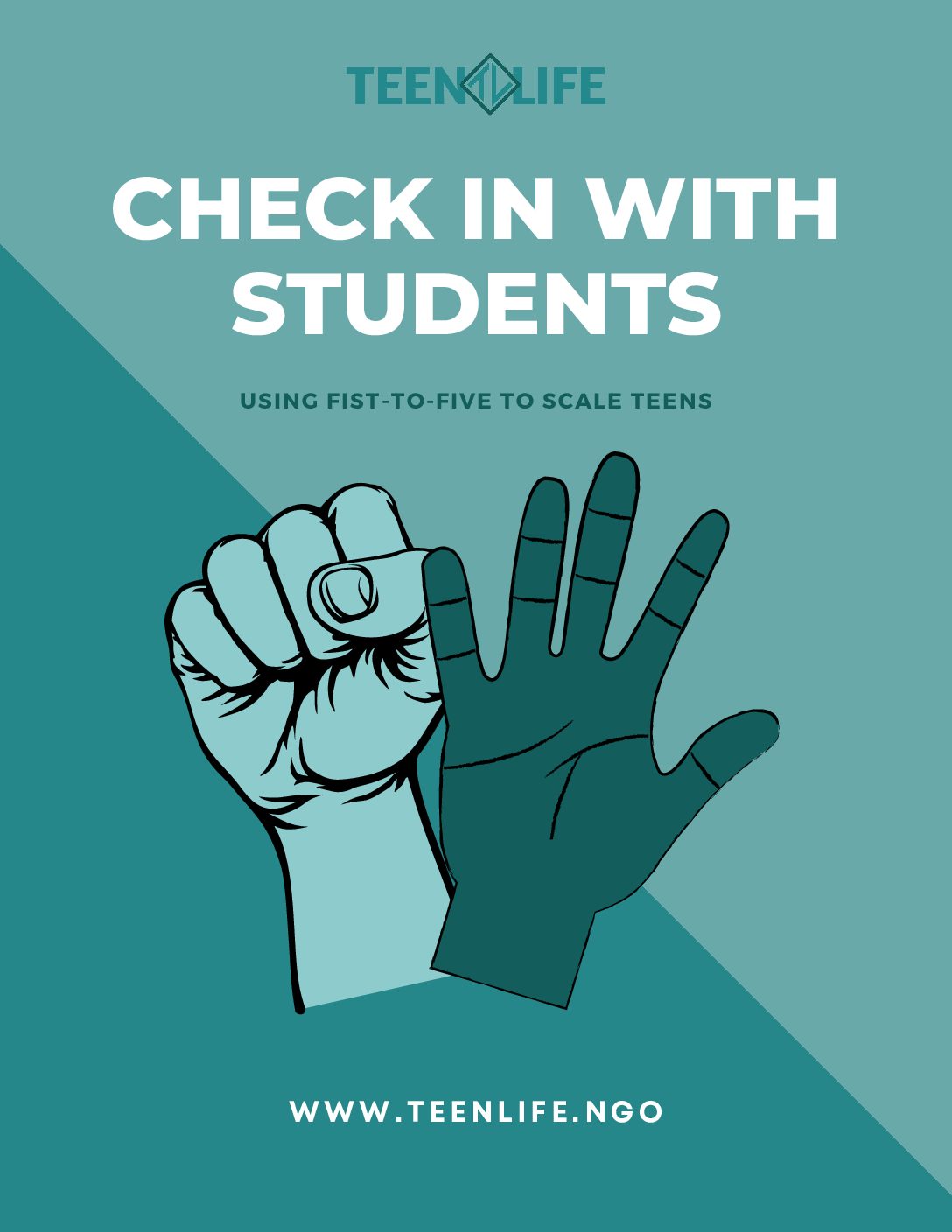
  • Do a check-in. Fist-to-five works great and then you know who to check on after class.
  • Follow up on stuff outside of class. Ask how the game went or how their job is going. Don’t only talk to them about school!
  • Model social skills like turn-taking, cooperation, and empathy on a daily basis. You can take it a step further and explain the behaviors you’re modeling. The next time you’re feeling frustrated, tell your students how you’re feeling. Talk about how you deal with frustration, such as taking a few deep breaths.
  • Look for ways to praise and compliment. Praise the effort rather than the outcome!
  • Create an environment where laughter is welcome! Encourage students to ask questions, make mistakes, and engage.
Fist-to-Five Check-In

Have students make a fist. On this scale, “fist” means bad. zero. low. the worst. Then, have students hold up 5 fingers. “Five” means the best. never better. awesome! Now, ask a question and have them hold up a number between “fist” and “five” to represent how they are feeling.

Download the pdf for questions to ask and easy-to-share  instructions.

Creating a Safe Environment

Prioritizing connection is a transformational approach to education. The positive impact extends beyond the classroom, setting students up for success in and outside of the classroom.

For many students, the most positive interactions they have in a day are with school staff. We appreciate the hard work that teachers, counselors, administrators and other do!

By celebrating student successes, offering support during challenges, and creating an environment where teens feel valued and heard, we empower our students to reach their full potential and shape a brighter future.

Also in this episode

Is your teen reading spicy books?

Spicy books, known for their edgy and romantic themes, have been captivating the hearts and minds of teens all over. In this episode, we’ll explore what makes spicy novels so appealing to teenagers, the impact they can have on young readers, and how parents and educators can navigate this literary landscape.

Spicy book terms to know

  • Spicy, Smutty, Steamy
    All implies that there is sexual content in a book.
  • ?️
    Spicy or shows a spice rating out of 5 peppers
  • Sweet Romance
    Focus is mostly on emotional intimacy. There may be sexual tension, but does not contain sex scenes. Could still contain some mild language.
  • Clean Romance
    Generally means no on-page sex, violence, or cursing.
  • Closed-Door
    When the reader knows that a couple had sex in the book, but it “fades to black” and has no on-page sex scenes.

In this episode, we mentioned or used the following resources about connecting with students & spicy books.

Have a question?

If you have a question about something you heard or just want to give us some feedback, please leave us a comment below.  We would love to hear from you!

About Us

Chris Robey
Chris Robey

Former CEO

Karlie Duke
Karlie Duke

Communications Director

More Resources You Might Like

Image of celebrating prom
Episode 123: School Partnerships & Fantasy Football
Happy multi-ethnic family at the beach smiling at the camera

#123: School Partnerships & Fantasy Football

#123: School Partnerships & Fantasy Football

 Listen & Subscribe

YouTube

How to build home-school partnerships to help students succeed

Everyone wants their children to be successful in school, but how is often a topic of debate. No matter which side of the many school debates you fall on, student success starts with a great home-school partnership.


Practical ideas for how to partner with the school well.

As a parent, it can be easy to let our past relationship with school as a student or as a parent of an older child color our current relationship with school. If we’ve had great experiences before, it’s a lot easier to hope for a great experience this year. But if you’ve had a negative experience, the flip side of the coin is also true. It can be easy to start believing the worst. That’s totally normal!

That’s why it’s essential to treat every year as a chance for a new start, for you, your kids, and your school.

In that vein, we’ve got a few ideas on how to get off on the right foot.


Be intentional about building positive relationships with school staff (teacher, principal, coach, front office, counselor, etc.)

It makes it easier to communicate with someone when there is an issue if you already have a relationship. You also have more compassion for people you know.

It feels more like everyone’s on the same team when you know people’s names and voices. It could start with a simple conversation or a small gift.

Just like with any friend, be respectful and believe the best of the teachers in your life. If there is a problem, talk to them instead of assuming the worst or talking bad about the school.


Have a good attitude about school!

Your attitude will be contagious when It comes to extracurriculars, homework, school rules, etc. If you set an upbeat tone, your kids are more likely to follow.

Your attitude is also key when it comes to school work. If you want to instill a life-long love of learning in your kids, focus on growth and not perfection. It’s hard for most parents to celebrate effort instead of results, but try exchanging a vague “good job!” with “wow you should be really proud of how hard you’ve worked!”

Part of having a good attitude about school can be supporting your general school community. Volunteer at the school when needed. Go to games or shows (even if your student isn’t part of it). Encourage teachers and staff.

When we feel like we’re part of a larger community, everyone benefits and students are more likely to feel like they are capable and able to reach out when they need help!


Create a good home environment for learning

In a busy world, it’s easy to overlook this one. Between sports practice and music lessons and life, being intentional about homework models executive functioning skills (think organization and self-control) for your kids that will help them in every aspect of life.


Here are a few tips on how to do it:
  • Set aside a place for students to study or do homework.
  • Create a routine that helps your student succeed at home.
  • We know everyone is busy, but make time to be available while your kids are working on homework.

Should Your Teen Play Fantasy Football?

As school starts and the fall season is fast-approaching, Fantasy Football is coming into full swing, and many students are playing. So what is it?


So what is fantasy football?

You select your own team of players, setting a lineup every week. Then, you watch as they run, pass, catch and score touchdowns, all of which are worth fantasy points.

Every week, you are matched up with someone else in your league, and whoever has the most fantasy points that week, wins!

At the end of the “fantasy season,” there are also usually playoffs to crown the winner of the league.


Benefits of fantasy football for teens

  • Kids can learn executive function and problem-solving skills playing fantasy football.
  • Academic skills such as math and reading are also routinely used in fantasy football.
  • Fantasy football can be an engaging way to leverage technology use into a family activity.
  • It can lead to connection if you do it as a family or if they play with friends.


Things to consider before your teen plays fantasy football

  • Encourage teens to play with people they know and not join random leagues.
  • Make sure you are monitoring their interactions with strangers.
    Any online platform can be used to groom kids to participate in other activities. It’s vital that you know who they are talking to and have honest conversations about the potential dangers. Help them understand that you never really know who you are talking to and they reality of sextortion and kidnapping.
  • Have conversations around money and gambling.
    Many leagues have a “buy in” at the beginning of the season so that the winners get money at the end. Gambling, including microbetting and sports betting is highly addictive, especially if they win. So use this as an excuse to start a conversation about it.


Fantasy football can be a great way to connect with your teenagers.

Ask about their team; ask about trades; watch games with them on the weekend; and cheer for their players! The more you get excited about things they are excited about, the more trust and connection you can build.

In this episode, we mentioned or used the following resources about home-school partnerships and fantasy football

Have a question?

If you have a question about something you heard or just want to give us some feedback, please leave us a comment below.  We would love to hear from you!

About Us

Chris Robey
Chris Robey

Former CEO

Karlie Duke
Karlie Duke

Communications Director

More Resources You Might Like

Episode 20 School Communication and Acronyms
Episode 19: Back to School Anxiety and Simone Biles
Why Apologizing Matters for You and Your Kids